
A cell price means nothing without its bin. What builds the cost, why the industry trades per watt rather than per piece, and how to compare quotations properly.
A single solar cell does not have a price in the way a commodity does. It has a price at a stated efficiency, a stated bin, a stated format and a stated quantity, and a number quoted without those four things is not comparable to anything. The reason is that a cell is bought for the power it will produce, not for the object itself, and two cells of identical dimensions can differ meaningfully in output. This article explains what actually builds a cell price, why the industry trades cells per watt rather than per piece, and how to compare quotations so you are comparing the same thing.
Why a Single Number Misleads
Ask what one cell costs and you will get answers that differ by a factor of two or more, and all of them can be correct. The variation is not noise. It comes from four variables that are usually left unstated:
This is why procurement teams in the industry rarely discuss a per-piece price at all. The working unit is currency per watt.
The Cost Stack Behind a Cell
A cell price is built from a small number of inputs, and their relative weight explains most of the price movement in the industry.
| Cost contributor | What it is | What moves it |
|---|---|---|
| Wafer | The silicon substrate, by far the largest single input | Polysilicon price, wafer thickness, wafer format, diamond-wire cutting cost |
| Metallisation paste | Silver paste for the front fingers and, on many routes, the rear | Silver spot price, paste formulation, finger geometry, whether the route uses plating instead |
| Process consumables | Diffusion chemicals, texture additives, cleaning chemistry, gases | Route choice, bath life, throughput |
| Energy | Furnace and drying consumption per cell | Thermal budget, furnace utilisation, local power price |
| Depreciation | Amortisation of a capital-intensive line over its output | Line capex, utilisation rate, technology lifetime |
| Yield loss | Cells scrapped or downgraded during production | Process stability, handling, inspection effectiveness |
Two observations follow. First, the wafer dominates, which is why cell prices track polysilicon more closely than they track anything a cell maker does. Second, the only line item a cell maker fully controls in the short term is the last one: yield. That is why process control matters more than equipment specification in a cell business.
Per Watt, Not Per Piece
Because cells are bought for output, the industry quotes per watt. The arithmetic is simple: divide the per-piece price by the cell’s rated power in watts. What this does is immediately expose a comparison that per-piece pricing hides.
Consider two offers. Cell A is cheaper per piece but sits in a lower efficiency bin; Cell B costs more per piece but lands in a higher bin. Per watt, B can be the cheaper purchase. The buyer then has to decide whether the extra watts are worth having, which depends on the module format, the target power class and the market the modules are going into. A high-efficiency cell that pushes a module into a premium power bin can be worth considerably more than the watt arithmetic alone suggests.
There is a second reason per-watt pricing dominates: it is the only basis on which cells and finished modules can be compared. If a module is priced per watt and a cell is priced per watt, the assembly margin becomes visible. That comparison is the starting point for anyone evaluating whether to buy modules or buy cells and build a module line.
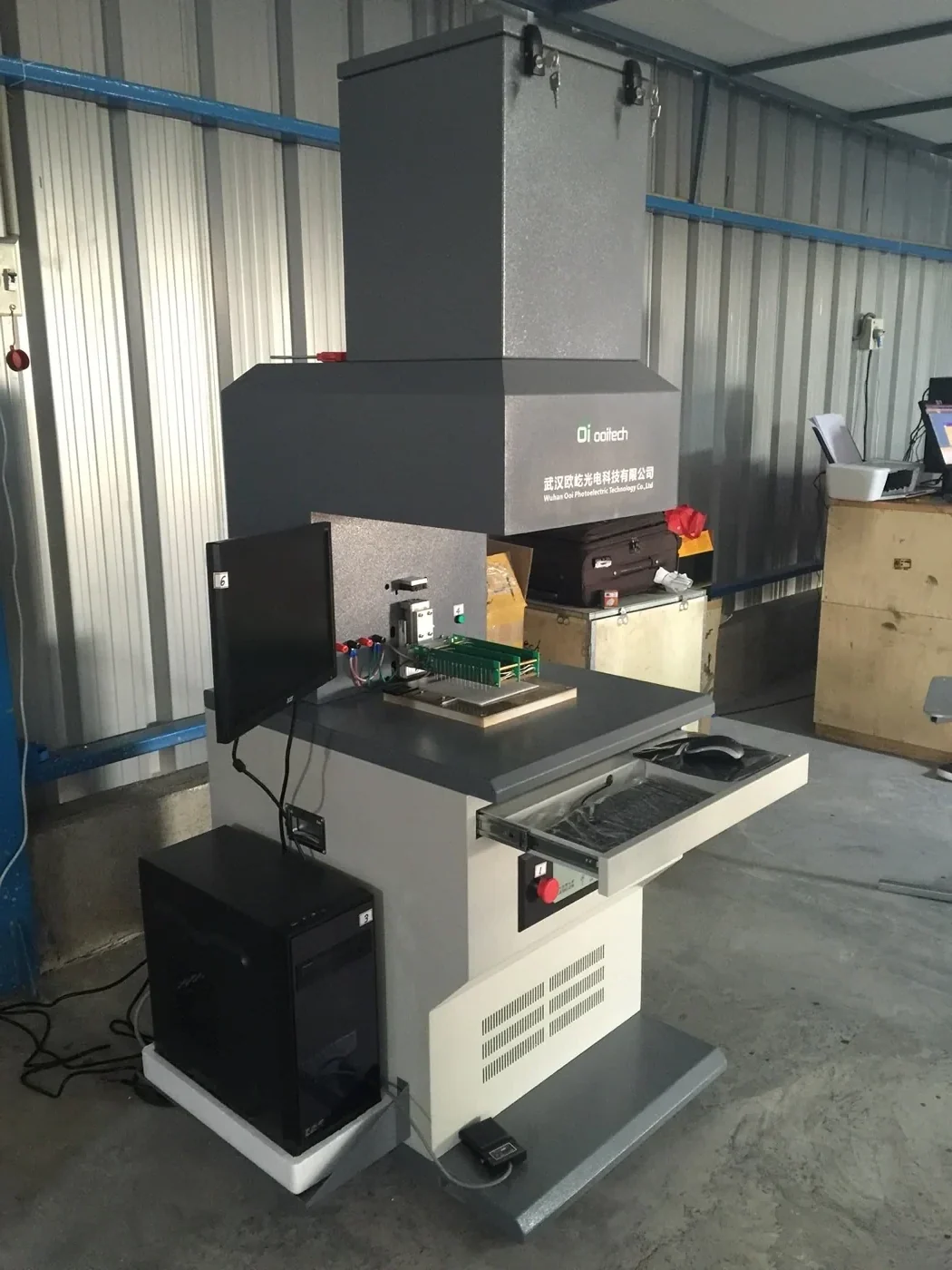
Per-watt pricing depends on measured output, so testing and binning sit directly between production cost and market price.
What Moves Cell Prices Over Time
Cell prices in this industry fall almost continuously, which is unusual for a manufactured good and worth understanding before budgeting anything.
How to Compare Cell Quotations
If you are buying cells, either to resell or to assemble into modules, the comparison only works if the quotations are normalised. Ask for all of the following for every offer before comparing anything:
- Efficiency and bin definition. Not just a nominal efficiency, but how bins are defined and what the distribution across bins looks like in the delivered lot.
- Power measurement conditions. Cells are measured under standard test conditions; confirm the calibration and whether the supplier reports independently verified data.
- Format and cutting. Full, half or third cut, with the cutting tolerance stated. Kerf loss and edge quality affect downstream yield.
- Technology route and rear structure. For TOPCon and BC cells in particular, ask about the rear-side structure, because it determines solderability and the stringer process window. Our overview of the tabber and stringer process covers where these differences land on the line.
- Delivery, packaging and breakage terms. Cell breakage in transit is a real cost and the Incoterm decides who carries it.
- Consistency and lot traceability. A good first lot followed by drifting lots will cost more in yield than any price difference.
The practical advice is blunt: never compare a per-piece price from one supplier with a per-watt price from another, and never accept a quotation that does not state the bin. If a supplier will not state the bin, that is itself information.
What This Means If You Plan to Make Modules
For anyone building a module line, cell cost is the largest single line in the unit economics and the one you have the least control over. That has three consequences worth planning for.
First, cell sourcing is a strategic decision, not a purchasing transaction. A single-source cell supply is a business risk regardless of how good the price is. Second, cell format determines your equipment: a line specified for full cells cannot simply be switched to half-cut or shingled cells without changes at the stringer and often at the layup. This is why we ask about cell format and target market before quoting stations — the stringer selection question is downstream of a cell decision you should make first.
Third, the per-watt arithmetic is the reason module assembly can be a viable business at all. The gap between cell price per watt and module price per watt is the gross margin available to cover assembly, materials, labour and yield loss. If you know both numbers, you can size the business honestly before spending anything on equipment. Our breakdown of what a line costs at different capacities is the other half of that calculation.
Frequently Asked Questions
What is the cost of one solar cell?
There is no fixed figure. A cell price depends on its efficiency bin, its format, the technology route and the quantity purchased, and it changes with polysilicon and silver prices. The working unit in the industry is currency per watt rather than currency per piece, because a cell is bought for the power it produces. Any quotation that omits the bin is not comparable to another quotation.
Why do cells cost different amounts if they look identical?
Because they are sorted into bins by measured output after production. Two cells of the same dimensions can land in different bins, and the higher bin is worth more. The difference is not cosmetic; it is measured electrical performance, and it propagates into the module power class.
Is it cheaper to buy cells or finished modules?
They solve different problems. Buying modules is a purchasing decision with no capital commitment. Buying cells and building modules requires a line, a building, working capital and process capability, and it only makes sense when the per-watt gap between cell and module covers those costs plus a return. That calculation is worth doing properly before committing to equipment.
How much of a cell price is silver?
Metallisation is the second-largest material input after the wafer and the most volatile, because it tracks the silver spot price. Its share varies with the technology route and with how aggressively the cell maker has reduced paste consumption. This is the reason low-silver and copper-plating routes attract so much development effort.
Do thinner wafers make cells cheaper?
They reduce silicon cost per cell, which is the point. The trade-off is mechanical: thinner wafers break more easily in cell processing and again at the stringer, and the breakage cost lands on a different part of the business than the material saving. The economics only work if the whole chain handles the thinner wafer.
Should I ask a supplier for a price per piece or per watt?
Ask for both, plus the bin definition. Per watt is the comparable unit and the one that reveals the real cost of output, but per piece matters for logistics, packaging and handling calculations. A supplier who can give you all three clearly is a supplier who knows their own product.