
Seven steps to start a solar panel manufacturing business: capacity, building, automation, raw materials, certification, staffing and how you will sell.
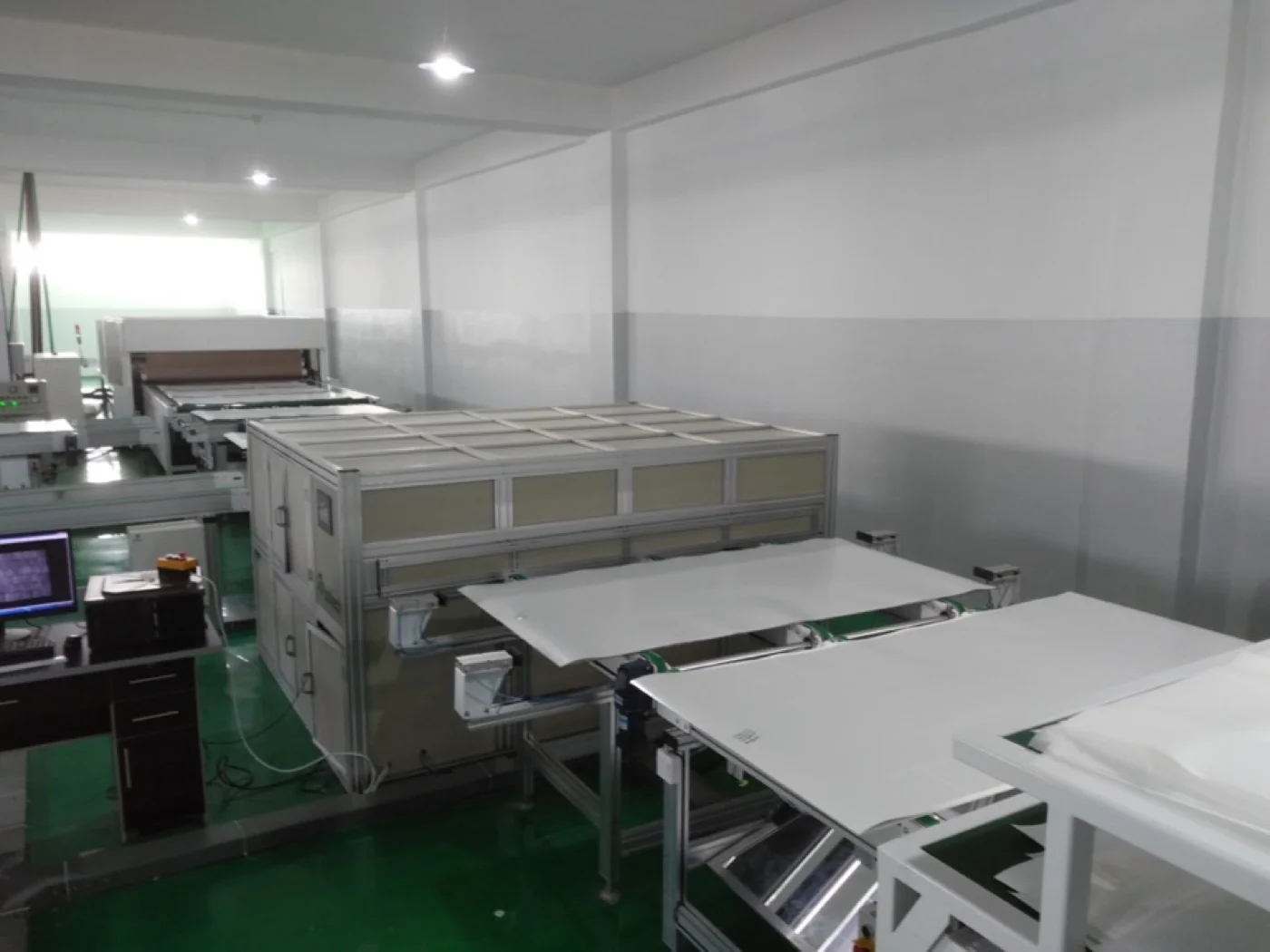
Quick answer: Most people who ask about starting a solar panel factory are not engineers. They are traders, EPC contractors and distributors who have customers and want to supply them directly, and their first question is usually about capacity rather than about cell technology. The practical starting point is the capacity tier, because it determines almost everything else: a 10 MW to 20 MW semi-automatic line is a single-shift operation with manual handling, 60 MW to 120 MW is where automation starts paying through yield, and 150 MW and above is a multi-shift plant with inline inspection. The second decision is which module formats the line must handle, since that fixes the stringer and laminator. Business plans that fail usually underestimated the building, power and working capital rather than the equipment.
Most people who contact us about starting a solar panel factory are not engineers. They are traders, EPC contractors and distributors who already sell panels and have decided to make them instead. This is the sequence that works.
PV Module Manufacturing · Starting a Factory · by Jerry, Ooitech
Step 1: Be Clear Which Business You Are Starting
"Solar panel manufacturing" covers two businesses with nothing in common except the word solar.
| Business | What you do | Capital intensity |
|---|---|---|
| Module assembly | Buy finished solar cells and assemble them into panels: string, lay up, laminate, frame, test | Moderate. This is the business almost every new entrant starts |
| Cell manufacturing | Turn silicon wafers into cells using diffusion furnaces, PECVD or ALD, screen printers and firing furnaces | An order of magnitude larger, with wet chemistry and emissions permitting |
Everything below applies to module assembly. If your ambition is cell manufacturing, the equipment, the building and the permitting are a different project and a different conversation. Most first factories assemble modules, supply their own distribution business, and only consider cells much later, if ever.
Step 2: Pick a Starting Capacity, and Only One
Capacity is the first decision because it sets the building, the utilities and the line. The good news is that entry is lower than most people expect.
| Starting capacity | Output | Building | Workers |
|---|---|---|---|
| 10 MW semi-automatic | 14 panels per hour | About 700 m² | 12–15 |
| 20 MW semi-automatic | 28 panels per hour | About 1,000 m² | 16–20 |
| 60 MW and above automatic | Line dependent | From roughly 2,500 m² | Headcount shifts from manual stations to supervision |
Two practical rules. First, 10 MW is smaller than it sounds: 14 panels an hour across two shifts is a real business, and it is where a large share of our customers start. Second, if you are planning to grow, say so at the specification stage rather than later. Several of our customers asked for a smaller line and then found the jump from 100 MW to 150 MW almost cost the same, because the bottleneck machines were already being specified at the higher tier. Building in headroom at the layout stage is free; retrofitting it is not.
Step 3: Settle the Building Before the Machine List
This is the step first-time buyers most often do in the wrong order, and it is the most expensive to reverse. A module line needs a floor that can carry the laminator, a ceiling high enough for the equipment, and humidity control.
The two hard constraints are a floor load-bearing capacity of at least 1,200 kg/m² and a clear height of 3.2 to 3.5 m in the production area. A standard light industrial unit frequently fails the first one. If you are renting, test the floor before you sign; if you are building, specify it now, because a reinforced slab is cheap at construction and a construction project afterwards.
One more point that surprises buyers: the warehouses are larger than the production hall is demanding. Raw material inventory is driven by cell and glass delivery lead times, not by line speed, so a small line still needs meaningful storage. Full design parameters by capacity are on our solar panel manufacturing plant cost page, including floor areas, utilities and staffing for a 300 MW plant. Send us a draft layout and we will mark it up with the equipment footprints and cycle times, which is how we prefer to start a project rather than with a price list.
Step 4: Choose Semi-Automatic or Fully Automatic
The honest answer for a first factory is usually semi-automatic, and the reason is not only capital.
| Semi-automatic | Fully automatic | |
|---|---|---|
| Best when | You are new to manufacturing, order sizes vary, and you want to learn the process with your own team | You have volume commitments, or an experienced production manager already |
| Where the labour goes | Into manual stations such as edge taping, trimming and unfeeding | Into supervision, maintenance and rework |
| Risk | Yield depends more on operator discipline | Higher capital at risk if utilisation stays low |
Note the last row. Equipment, building and most payroll are fixed costs, so a fully automatic line running one shift can be less profitable than a semi-automatic line running two. Automation is a bet on volume, and volume is the thing a new factory does not yet have.
Step 5: Plan Raw Material Supply Before You Order Machines
This is the second most common gap in first enquiries, after the building. A production line is useless without cells, ribbon, encapsulant, backsheet, glass, frames and junction boxes arriving on schedule, and these are a recurring cost that dwarfs the machine budget over time.
Three things to settle early:
Step 6: Understand Who Certifies What
Certification questions come up early and are usually misunderstood. There are two separate scopes.
| Scope | Who handles it |
|---|---|
| Certification of your factory and your modules | You. Your plant is certified, and so is the product you ship. A supplier cannot certificate your factory on your behalf. |
| Certification and test documentation for the machines | The equipment supplier. Ask for the CE documentation and the machine test data that your own factory audit will reference. |
The practical consequence is that certification is a project you run in parallel with the build, not something you can start after installation. Your customer's incoming inspection, your tender requirements and your own quality system all reference it, and the EL and IV test records your line produces become the evidence base.
Step 7: Decide How You Will Sell Before You Build
The most successful first factories we have supplied did not stop at manufacturing. One Egyptian customer installed a 10 MW semi-automatic line and then launched an EPC business, installing systems across the country using modules they produced themselves. The same panel earns a commodity margin at the factory gate and a project margin once it is installed.
Three routes are common, and they are not exclusive:
Decide this before specifying the line, because it changes the answer in three places: the module formats you need, the defect and traceability requirements, and whether you need a second EL station for a customer-facing inspection record.
Common Mistakes
| Mistake | Why it hurts |
|---|---|
| Choosing the line before the building | Floor load and ceiling height cannot be renegotiated cheaply, and they decide which line fits |
| Buying capacity you cannot fill | Fixed costs spread over too few panels; a large line at low utilisation loses to a small line at full utilisation |
| Sourcing machines and materials from separate suppliers | Split responsibility when yield falls, and two lead times to manage |
| Forgetting working capital | Raw material inventory and payroll must be funded until the first modules are paid for |
| Treating training as an afterthought | Yield in the first months is set by operator skill, not by machine specification |
FAQ
I am new to this field. What capacity should I start with?
A 10 MW or 20 MW semi-automatic line is the usual entry point. A 10 MW line runs about 14 panels per hour, needs roughly 700 m² and 12 to 15 workers. Several customers have asked us to start smaller still, and it is workable, but below about 5 MW the manual stations begin to dominate the process and the line stops teaching you manufacturing discipline.
How many staff will I need?
It depends on capacity and automation. As a reference, our 150 MW double-glass plan uses 24 operators per shift, of whom three are on rework. For semi-automatic lines, expect a larger share of headcount in manual stations such as edge taping, trimming and unfeeding.
How long does delivery and installation take?
Our standard terms are 30 percent deposit with the balance before shipping, and delivery of about 35 to 40 days after the down payment for smaller semi-automatic lines. Larger automatic lines take longer and are scheduled per project. Installation and training support is included online, with on-site commissioning scoped separately.
Can I inspect the machine before I buy it?
Yes, and it is worth doing. Customers regularly visit our factory in Wuhan and, where a similar line is already running nearby, we arrange a reference visit so you can see the equipment in production rather than on a showroom floor.
Do you help with certification?
We supply the machine-level certification and test documentation, including CE documentation for the equipment. Certification of your factory and of the modules you produce is yours to obtain, because it covers your plant and your product. We will tell you what test records your line should retain to support it.
What is the smallest solar panel factory that makes sense?
A single semi-automatic line of around 5 to 10 MW is the practical floor for a commercial operation, and it needs roughly 700 m² of production space with the same floor loading as a larger plant. Below that, you are closer to a workshop than a factory, and the economics depend on a local niche rather than on volume.
Can I start with a smaller line and expand later?
Yes, and it is the usual path, but plan the expansion at layout stage. Leave space and utility capacity for the next machine, and pick a line architecture you can add to. Retrofitting power, air and floor space into a running factory costs far more than reserving them when the building is empty.
How much does it cost to start a solar panel manufacturing business?
Start with the smallest configuration that produces a sellable, certifiable module, then add capacity when demand justifies it. A semi-automatic line at modest capacity needs far less capital than a fully automatic one, and it has the additional advantage that the learning happens while the volume is still small. Many of the factories we have equipped began semi-automatic and upgraded station by station.
The budget beyond the machines is what catches people out: building preparation, power and air, working capital for cells and materials, certification, and the payroll that runs from installation day regardless of whether you have orders. A realistic startup budget therefore has a contingency line, and a realistic plan has a first customer identified before the first machine is ordered.
Final Thoughts
Start with the building and the capacity, then the automation level, then the machine list. The order matters because each decision constrains the next, and the cheapest mistakes to avoid are the ones made in the wrong sequence. Fix your cell format early, decide how you will sell before you specify the line, and budget working capital alongside equipment. Send us your target capacity, the building dimensions and ceiling height you have available, and the module types you intend to sell, and we will tell you what fits and what has to change.